Strategic Pod Positioning in Running Footwear Based on Pronation Analysis from Gait Evaluations
Taylor Hayes · Nov 5, 2026
Strategic Pod Positioning in Running Footwear Based on Pronation Analysis from Gait Evaluations
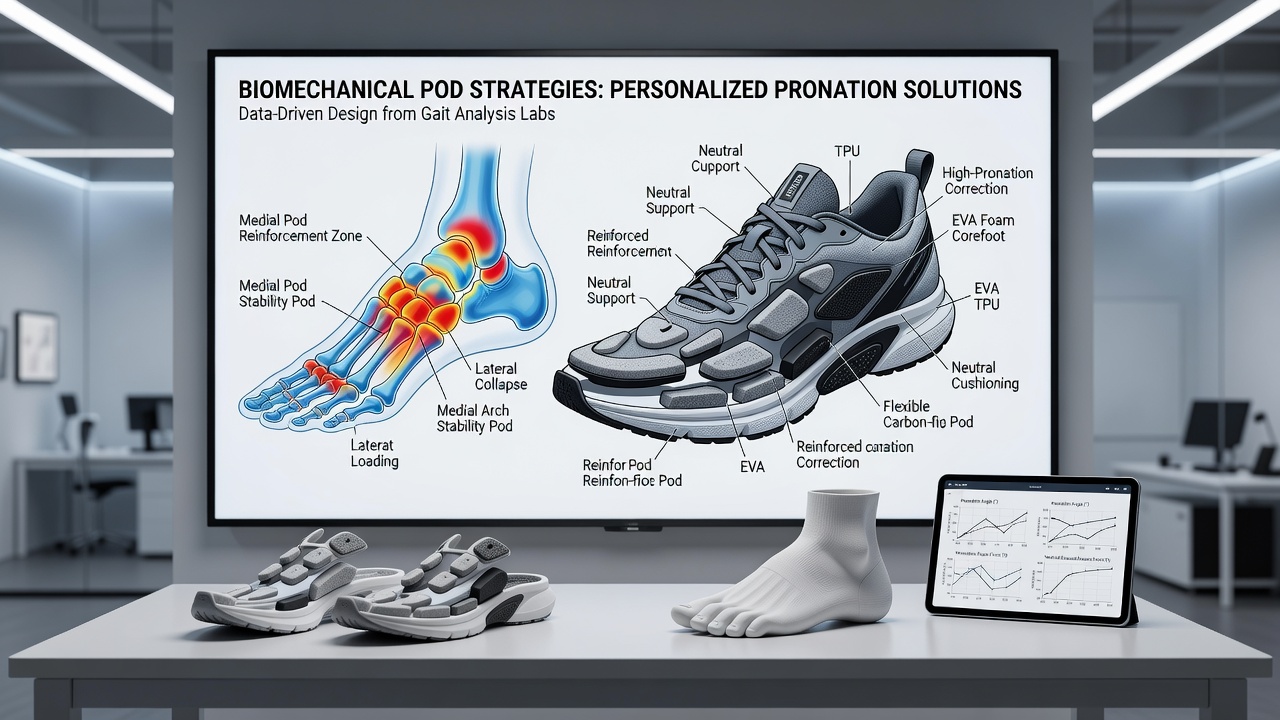
Running shoe manufacturers integrate pod placement strategies that respond directly to individual pronation metrics obtained through biomechanical assessments, and these designs incorporate data from gait analysis systems that measure foot strike patterns, medial and lateral pressure distribution, plus rearfoot eversion angles during treadmill and overground testing. Pod configurations vary by runner category, with neutral runners often receiving evenly distributed cushioning pods while those exhibiting overpronation receive reinforced medial pods that limit excessive inward roll.
Assessment Protocols and Data Collection Methods
Biomechanical laboratories employ pressure-mapping insoles alongside three-dimensional motion capture cameras to record pronation values, and technicians collect metrics such as peak eversion velocity and total pronation excursion over multiple strides before translating these numbers into pod density and positioning recommendations. Data from these sessions feed into design software that calculates optimal pod locations along the midsole, ensuring that firmer pods sit under the medial arch for overpronators while softer lateral pods accommodate supinators who display limited inward movement.
Studies conducted at institutions across North America and Europe demonstrate that runners fitted with assessment-derived pod placements experience measurable reductions in peak rearfoot eversion compared with standard shoes, and researchers note that these reductions occur without altering overall cushioning feel for most participants. Australian sports science centers have contributed similar findings using portable gait analysis kits that allow field testing on actual running surfaces rather than laboratory treadmills alone.
Pod Material Variations and Placement Patterns
Engineers select pod materials based on durometer readings that range from soft ethylene-vinyl acetate compounds for impact absorption to harder thermoplastic polyurethane inserts for stability, and placement patterns position these elements under key zones including the heel, midfoot, and forefoot. Overpronation cases typically feature a cluster of firmer pods along the medial side that extend from the heel through the arch, whereas neutral patterns distribute pods symmetrically to maintain balanced cushioning without directional bias.
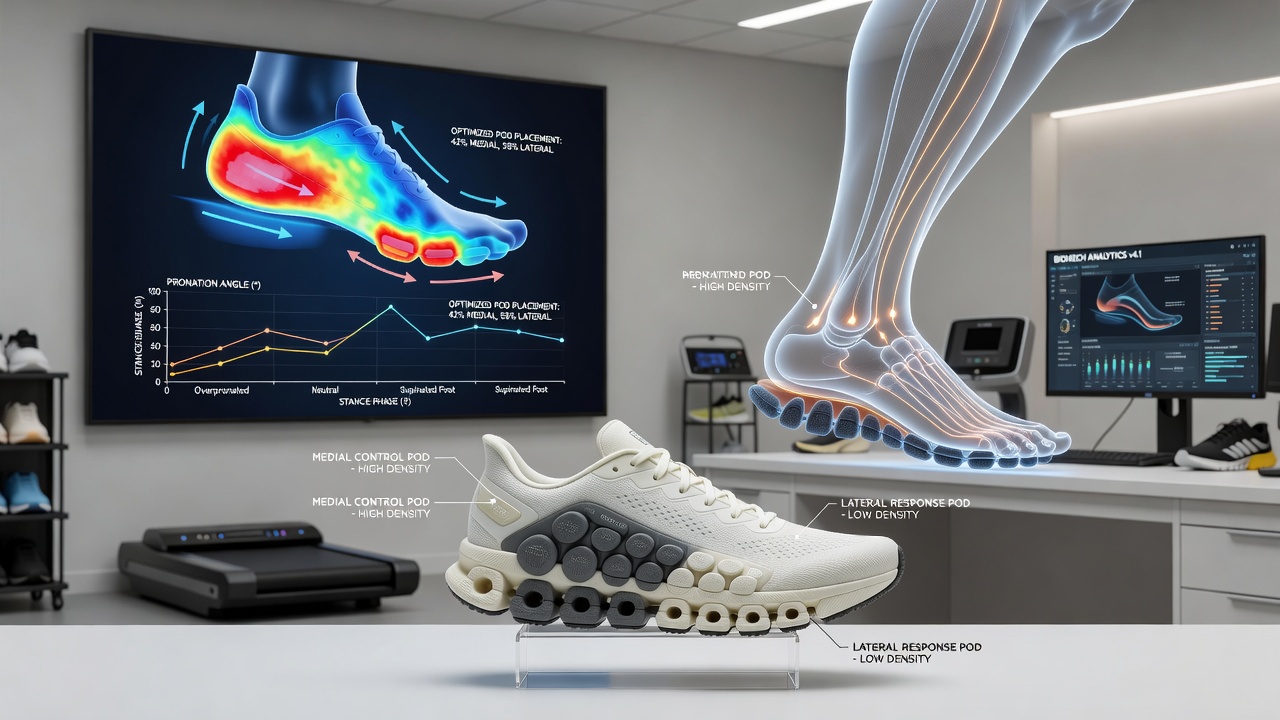
Supination metrics, when identified during assessment, lead to lateral pod reinforcement that supports the outer edge of the foot during push-off phases, and manufacturers adjust pod thickness in these zones to prevent excessive outward roll that can contribute to ankle instability. Recent production cycles incorporate modular pod systems that allow retailers to swap individual pods according to updated biomechanical reports, creating a pathway for runners to adapt footwear as their gait characteristics evolve over training seasons.
Integration with Broader Stability Features
Pod placement works alongside other stability elements such as medial posts and guidance rails, yet the pods provide targeted, localized support that addresses specific pronation peaks rather than applying uniform correction across the entire midsole. Industry reports from Canadian research groups indicate that combining pod strategies with lightweight guidance structures produces lower overall shoe weight while maintaining corrective effectiveness for moderate pronators.
November 2026 brings several international biomechanics conferences where updated protocols for pod placement calibration are scheduled for discussion, and attendees expect presentations on real-time sensor integration that could refine pod positioning recommendations during initial fitting sessions. These developments build on existing practices where assessment data already guides precise placement rather than relying on generic stability categories.
Performance Outcomes from Controlled Testing
Controlled trials published through academic channels show that runners using pronation-specific pod placements maintain consistent stride lengths over extended runs compared with those in non-customized footwear, and pressure distribution data collected during these trials confirm reduced loading under the medial forefoot for overpronators. European trade organizations tracking injury trends report lower incidence of shin splints among groups fitted through biomechanical assessment programs that incorporate pod customization.
Manufacturers continue to refine algorithms that convert raw pronation metrics into pod coordinates, and software updates incorporate larger datasets from diverse running populations to improve accuracy across different foot shapes and running speeds. The process remains iterative, with follow-up assessments recommended after several months of use to verify that pod placement continues to match any shifts in gait patterns.
Conclusion
Pod placement strategies derived from biomechanical pronation metrics represent a data-driven approach to running shoe design that aligns cushioning elements with individual foot mechanics, and ongoing research from multiple geographic regions continues to expand the precision of these methods. Runners benefit when assessment protocols capture detailed gait information that directly informs pod positioning, resulting in footwear that addresses specific stability needs without unnecessary bulk or correction.