Soccer Cleat Innovations Target Hybrid Turf for Uniform Acceleration in Professional Competitions
Alex Griffin · Nov 19, 2026
Soccer Cleat Innovations Target Hybrid Turf for Uniform Acceleration in Professional Competitions
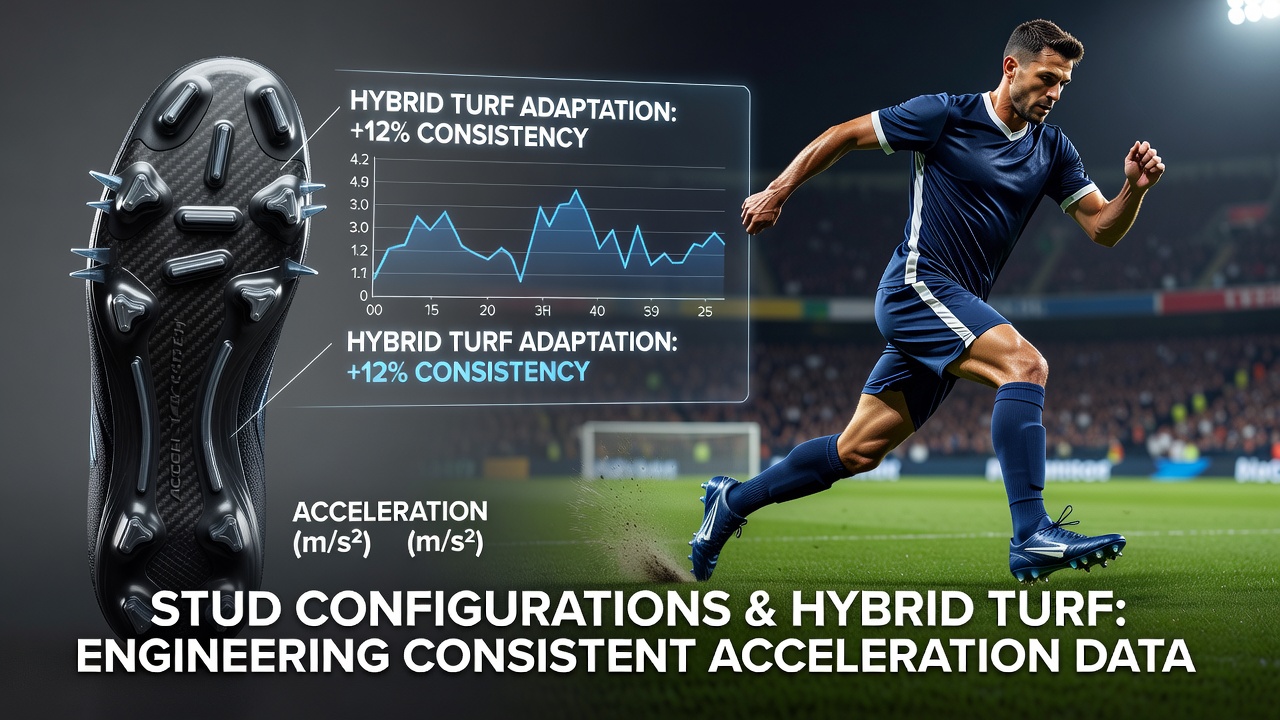
Hybrid turf surfaces combine natural grass with synthetic fibers to create more durable pitches that withstand heavy use across professional soccer leagues, and stud configurations in cleats have evolved to maintain consistent acceleration metrics on these fields. Researchers at sports performance laboratories track player movement data to identify how different stud patterns influence traction without excessive slip or resistance during sprints and directional changes.
Hybrid Turf Characteristics and Player Demands
Hybrid surfaces feature reinforced root zones that increase stability compared to traditional grass alone, yet they present variable grip levels depending on weather, wear patterns, and maintenance schedules. Data from multiple European and North American leagues indicate that acceleration consistency drops when studs fail to penetrate or release properly from the mixed fiber structure. Professional players often encounter these conditions during matches scheduled in late autumn, including periods around November 2026 when fixture congestion peaks in several top divisions.
Studies conducted by the FIFA Quality Programme reveal that hybrid pitches require studs with specific geometries to balance penetration depth and surface release, which helps preserve repeatable sprint times across different venues. Observers note that leagues in Australia and Canada have adopted similar surface standards, allowing researchers to compare acceleration datasets from varied climates and grass species.
Stud Geometry Variations and Their Functional Roles
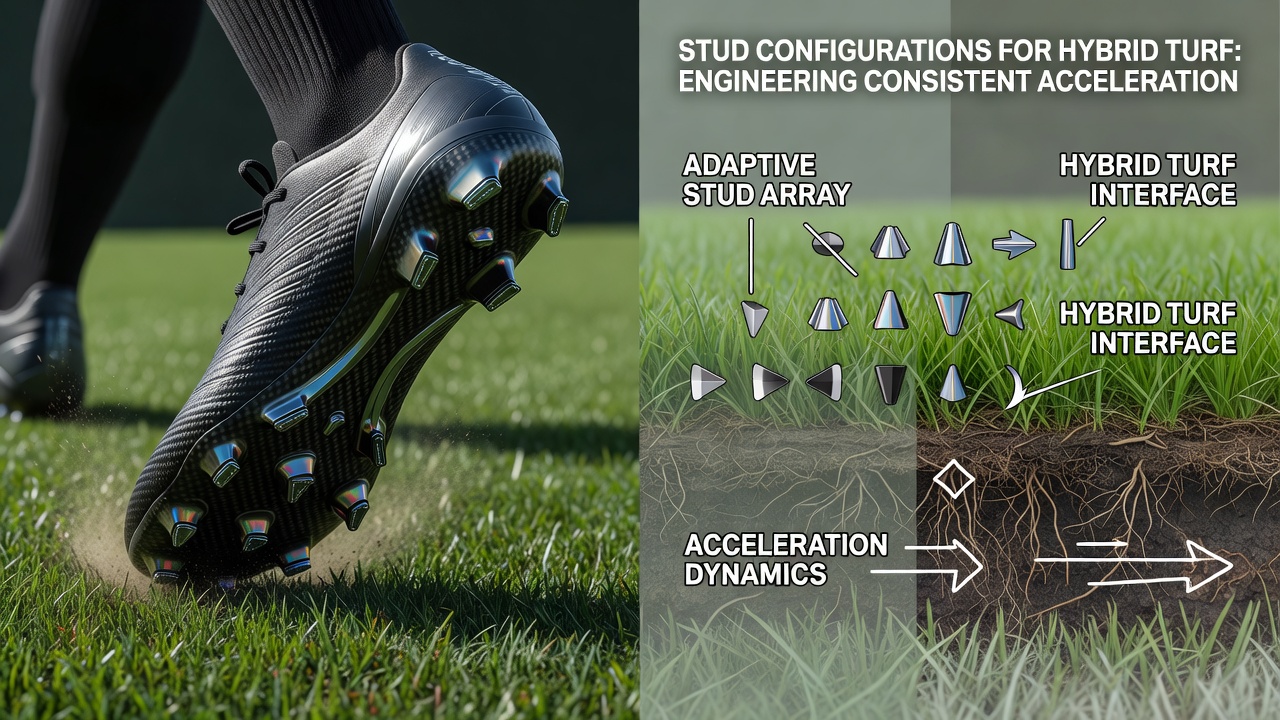
Manufacturers produce conical studs for even pressure distribution on hybrid turf, while bladed designs offer directional grip suited to rapid acceleration phases. Round studs tend to reduce rotational resistance during pivots, and teams collect GPS and accelerometer readings to quantify how each shape affects force application at the foot-surface interface. One study from a German sports engineering institute demonstrated that mixed stud arrangements, combining shorter central studs with longer edge studs, produced more uniform acceleration profiles across repeated sprints on hybrid test beds.
Adjustable stud systems allow players to swap components based on pitch reports issued before matches, and data logs from the English Premier League and Major League Soccer show measurable improvements in acceleration repeatability when cleats match the reported hybrid fiber density. Those who analyze these datasets point out that blade length and angle directly influence horizontal force generation during the first few steps of a sprint.
Data Collection Methods Across Leagues
Professional clubs employ wearable sensors and video analysis to gather acceleration figures during training and matches on hybrid surfaces, creating large datasets that span multiple seasons. According to reports published by the Union of European Football Associations, standardized testing protocols now include hybrid pitch simulations that replicate fiber resistance levels found in stadium environments. These protocols help identify stud setups that minimize variability in peak acceleration values between home and away fixtures.
Researchers compare results from South American and Asian leagues where hybrid installations have expanded recently, noting that stud patterns optimized for European conditions sometimes require modification for different grass blends. Figures from ongoing monitoring programs indicate that players using adaptive stud configurations maintain acceleration consistency within narrower margins across the season, particularly during congested schedules that extend into November 2026.
Implementation Examples and Performance Tracking
Teams in the Bundesliga have documented cases where switching to hybrid-specific stud arrangements reduced variance in measured sprint metrics during matches played on reinforced pitches. Similar adjustments appear in training regimens across Australian A-League clubs, where data analysts correlate stud geometry choices with on-field acceleration outputs recorded through league-approved tracking systems. Observers note that these adaptations help maintain performance parity when players transition between natural and hybrid venues within the same week.
Industry organizations such as the International Federation of Association Football continue to update surface certification standards that indirectly influence cleat design guidelines, and research papers from Canadian university sports science departments provide comparative analysis of acceleration data collected under controlled hybrid conditions. The combined information supports ongoing refinement of stud configurations tailored to professional requirements.
Conclusion
Stud configurations continue to adapt in response to widespread hybrid turf adoption, with performance data guiding design choices that support consistent acceleration across professional leagues. Ongoing collaboration between equipment manufacturers, surface specialists, and data analysts sustains this development, ensuring cleat options align with the demands of modern playing surfaces through November 2026 and beyond.