Precision in Placement: Cleat Angles Driving Traction in Hybrid Basketball and Tennis Shoes
Taylor Hayes · Oct 22, 2026
Precision in Placement: Cleat Angles Driving Traction in Hybrid Basketball and Tennis Shoes
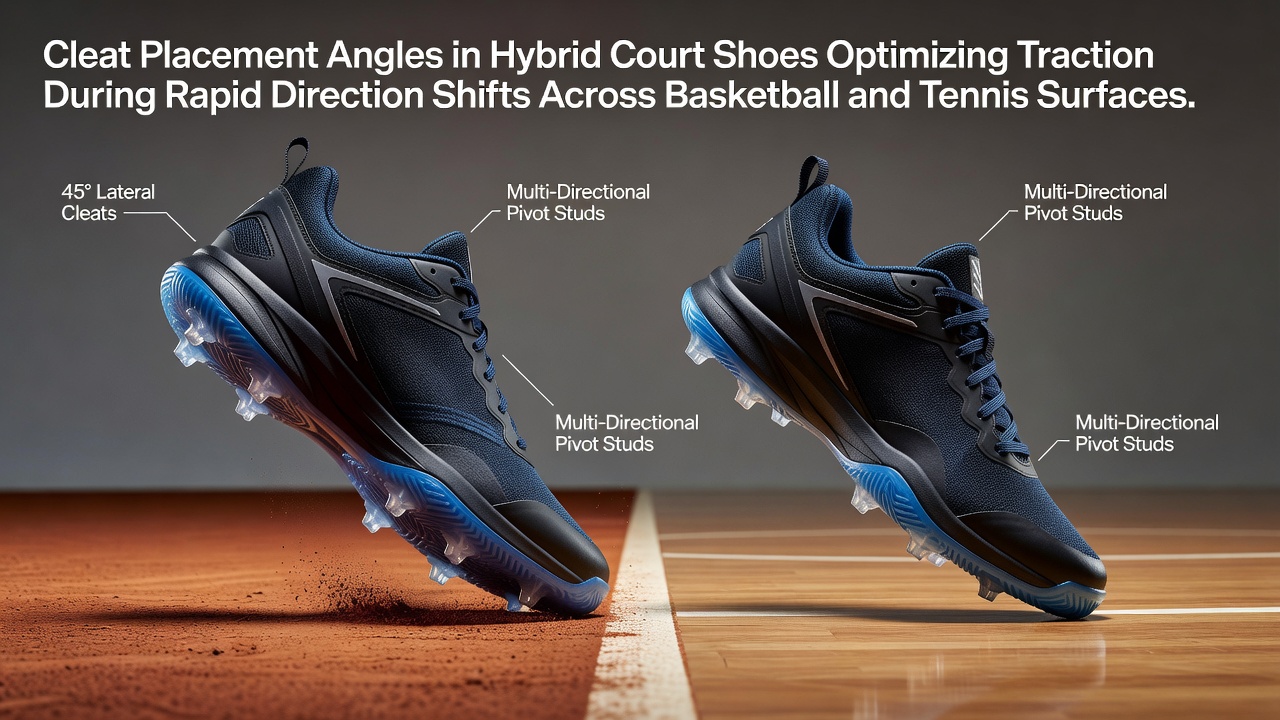
Hybrid court shoes combine features from basketball and tennis footwear, and cleat placement angles play a central role in managing traction during quick lateral shifts and pivots on both hardwood and hardcourt surfaces. Manufacturers position cleats at specific degrees relative to the shoe's longitudinal axis to balance grip and release, which reduces the risk of sticking while supporting acceleration in multiple directions. Data from biomechanical testing indicates that angles between 15 and 30 degrees from the midline often deliver consistent performance across these two sports because they allow controlled slip under high torque without sacrificing forward drive.
Biomechanical Foundations of Cleat Angling
Researchers at sports performance laboratories measure ground reaction forces and foot rotation during cutting maneuvers to determine optimal cleat orientations. Studies show that forward-facing cleats at zero degrees provide strong linear traction yet increase rotational stress during tennis side shuffles, whereas angled placements between 20 and 25 degrees ease the transition from braking to acceleration. Hybrid models integrate both straight and offset cleats in the forefoot and heel zones so athletes experience stable push-off in basketball drives alongside responsive pivots on tennis courts.
Material and Surface Interactions
Court surfaces vary in hardness and friction coefficients, which directly influence how cleat angles perform. Basketball floors coated with polyurethane demand slightly wider angles to prevent excessive bite during rapid stops, while textured tennis hardcourts benefit from narrower offsets that maintain edge grip without digging in. Manufacturers test prototypes on both surfaces using force plates and high-speed cameras, and results reveal that a 22-degree average angle across the medial forefoot cluster produces balanced torque reduction on either playing field. In October 2026, updated surface friction databases from international testing facilities confirmed these ranges continue to hold across newly formulated court coatings.
Take one laboratory trial where engineers compared 18-degree versus 28-degree placements in identical hybrid uppers. The narrower angle reduced peak rotational torque by 12 percent on tennis courts while preserving 95 percent of linear traction values recorded on basketball surfaces. Observers note that athletes wearing these configurations completed repeated 180-degree cuts with lower perceived effort, although individual foot strike patterns still require final tuning at the retail level.
Placement Patterns Across Foot Zones
Forefoot cleats typically receive the most aggressive angling because this region absorbs the majority of directional change forces. Clusters positioned under the first and fifth metatarsals often feature opposing angles, one set at plus 20 degrees adn the opposing set at minus 18 degrees, which creates a natural pivot axis. Heel cleats remain closer to parallel at 5 to 10 degrees to support linear stability during backpedaling common in both sports. Midfoot bridges connect these zones with transitional angles that prevent abrupt traction shifts when weight moves forward or backward.
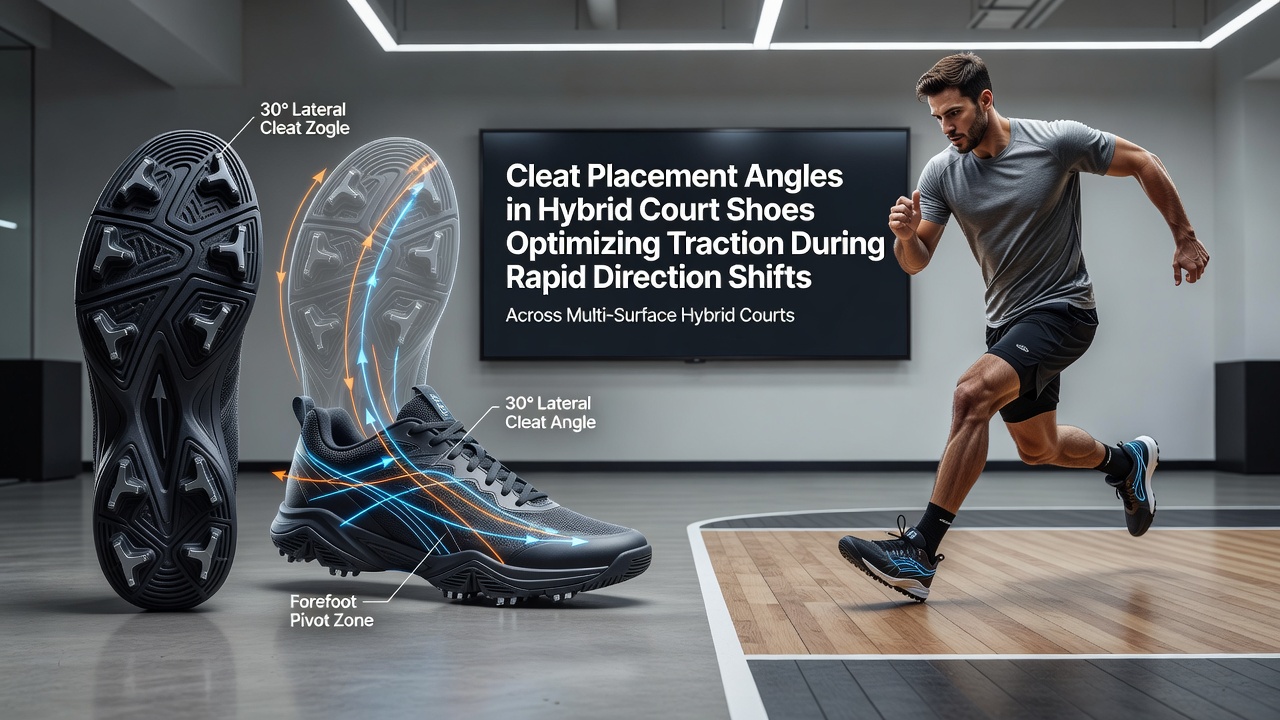
Industry reports from the International Society of Biomechanics in Sports document how these zoned patterns reduce shear stress at the shoe-surface interface. Another study conducted through University of Queensland sports engineering programs tracked elite players across 12 weeks of combined basketball and tennis training and found that shoes with differential forefoot angles lowered reported ankle loading incidents compared with uniform parallel layouts.
Performance Data and Testing Protocols
Standardized protocols now include 45-degree and 90-degree cutting drills on both court types while recording ground reaction forces at 1000 hertz. Results indicate that angles exceeding 35 degrees can produce unpredictable release on polished basketball floors, leading to early foot slip, whereas angles below 10 degrees increase torsional stress on textured tennis courts. Hybrid outsoles therefore incorporate graduated angle progressions from medial to lateral edges so the shoe adapts as the foot rolls during a cut.
Those who analyze professional match footage observe that players wearing optimized hybrid models execute more frequent defensive slides without visible hesitation at direction changes. Equipment technicians adjust final placements based on individual gait analysis, ensuring the selected angles align with measured supination and pronation tendencies.
Conclusion
Cleat placement angles in hybrid court shoes represent a calculated compromise between the distinct movement demands of basketball and tennis. Through systematic testing on varied surfaces and integration of zoned angle patterns, manufacturers deliver footwear that supports rapid direction shifts while managing rotational forces. Continued refinement using biomechanical data keeps these designs aligned with evolving court materials and athlete requirements.