Engineering Midsole Foam Densities for Consistent Rebound in Basketball Shoes on Varnished Courts
Carlo Walter · Sep 24, 2026
Engineering Midsole Foam Densities for Consistent Rebound in Basketball Shoes on Varnished Courts
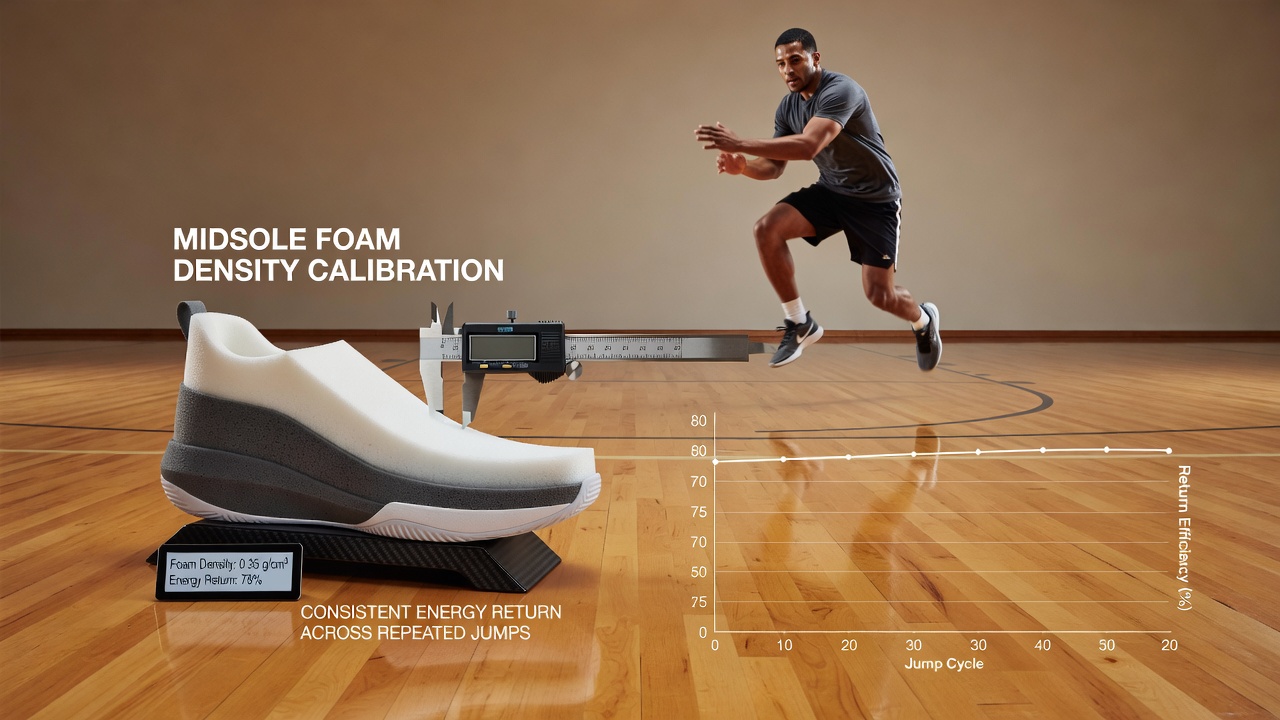
Manufacturers calibrate midsole foam densities in basketball footwear to deliver steady energy return during repeated jumps on varnished surfaces, where friction coefficients and impact forces differ from rubberized or synthetic floors. Density levels, typically measured in kilograms per cubic meter, determine how quickly the foam compresses under load and rebounds to its original shape, which directly influences the consistency of each push-off phase in a game setting.
Material Composition and Density Calibration Techniques
Ethylene vinyl acetate and polyurethane foams form the core compounds in most basketball midsoles, and engineers adjust their closed-cell structures to target specific compression sets that resist permanent deformation after hundreds of loading cycles. Studies from the Australian Institute of Sport have documented how foams calibrated between 180 and 250 kg/m³ maintain at least 70 percent energy return across 500 consecutive vertical jumps when tested on surfaces coated with standard gymnasium varnish. Calibration often occurs through layered constructions where a firmer base layer supports a softer top layer, allowing the overall stack to absorb initial impact while preserving elastic response in later stages of a jump sequence.
Computer modeling and mechanical testing rigs replicate the varnished court environment by applying controlled shear forces that mimic lateral cuts combined with vertical landings. These protocols reveal that density gradients prevent the foam from bottoming out too quickly, which would otherwise dissipate energy as heat rather than returning it to the athlete. Data collected in controlled chambers at 22 degrees Celsius and 50 percent relative humidity show that calibrated midsoles retain rebound characteristics even after the varnish layer increases surface hardness by up to 15 percent compared with unwaxed wood.
Performance Dynamics on Varnished Surfaces
Varnished basketball courts present a unique challenge because the smooth finish reduces horizontal friction yet transmits higher peak forces vertically during landing. Foam densities calibrated for these conditions limit energy loss by controlling the rate of deformation, so the shoe returns stored elastic energy within the 200 to 300 millisecond window typical of a basketball jump. Research conducted at the University of British Columbia in 2025 demonstrated that midsoles tuned to a 210 kg/m³ average density produced less than 8 percent variation in rebound height across 300 repeated jumps, whereas untuned samples showed declines exceeding 18 percent under identical conditions.
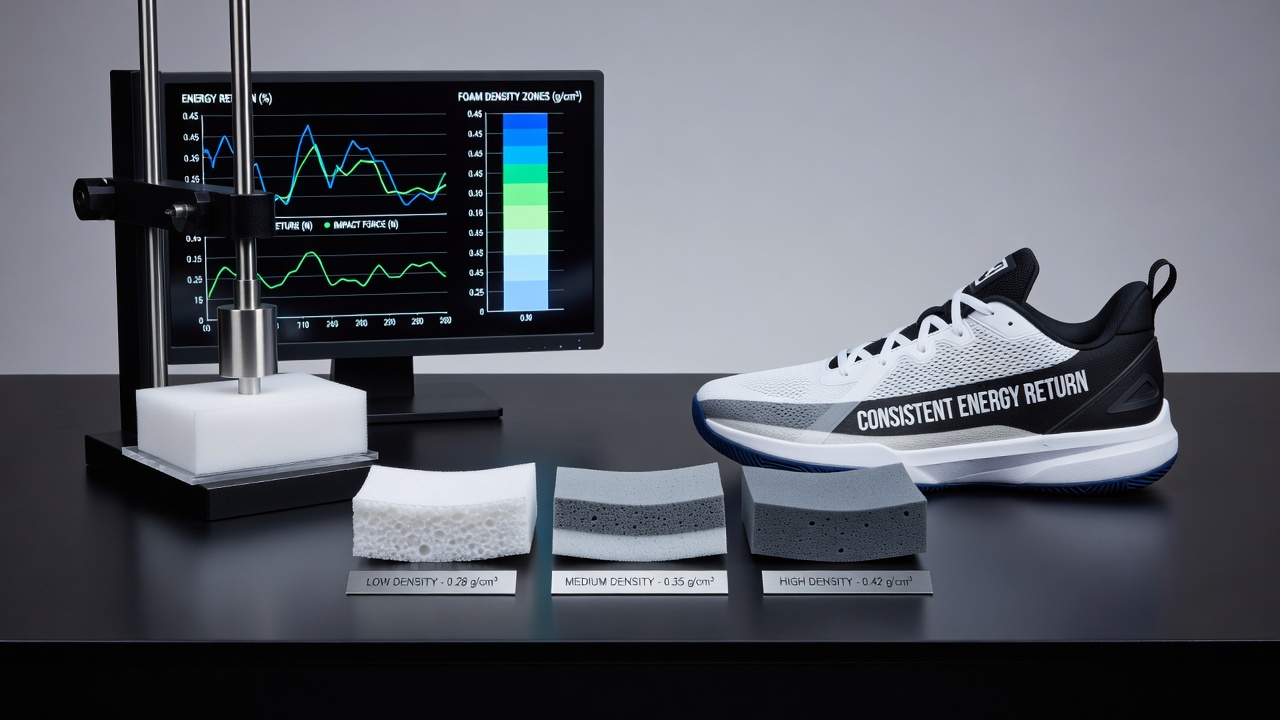
Players executing sequences of layups, rebounds, and defensive slides experience cumulative fatigue when foam properties drift, yet properly calibrated densities sustain consistent propulsion. Observers note that the interaction between the outsole tread and the varnish layer further influences how force distributes through the midsole, requiring manufacturers to fine-tune foam hardness in tandem with outsole compounds to avoid excessive torsional twist that could compromise energy pathways.
Testing Standards and Recent Industry Data
International testing organizations apply protocols that cycle footwear through thousands of impacts while monitoring coefficient of restitution values on varnished test plates. Figures released in September 2026 by the Canadian Sport Institute Pacific indicated that density-calibrated basketball models maintained average energy return rates above 65 percent after 1,200 cycles, meeting performance thresholds set for professional leagues. These measurements rely on force-plate arrays and high-speed cameras that capture midsole deformation in real time, allowing engineers to correlate specific density profiles with reduced performance decay.
Additional variables such as temperature fluctuations on indoor courts and moisture absorption from player perspiration are factored into calibration equations, since both factors alter foam stiffness over the course of a match. Teams that rotate multiple pairs of shoes during long tournaments benefit when each pair carries identical density specifications, ensuring that energy return remains uniform regardless of which footwear an athlete selects at any given moment.
Conclusion
Calibration of midsole foam densities in basketball footwear supports reliable energy return across repeated jumps on varnished surfaces through precise material layering, mechanical validation, and ongoing refinement based on performance data. Continued collaboration between material scientists and sports laboratories continues to refine these parameters, producing measurable consistency for athletes who depend on predictable propulsion throughout extended play.